
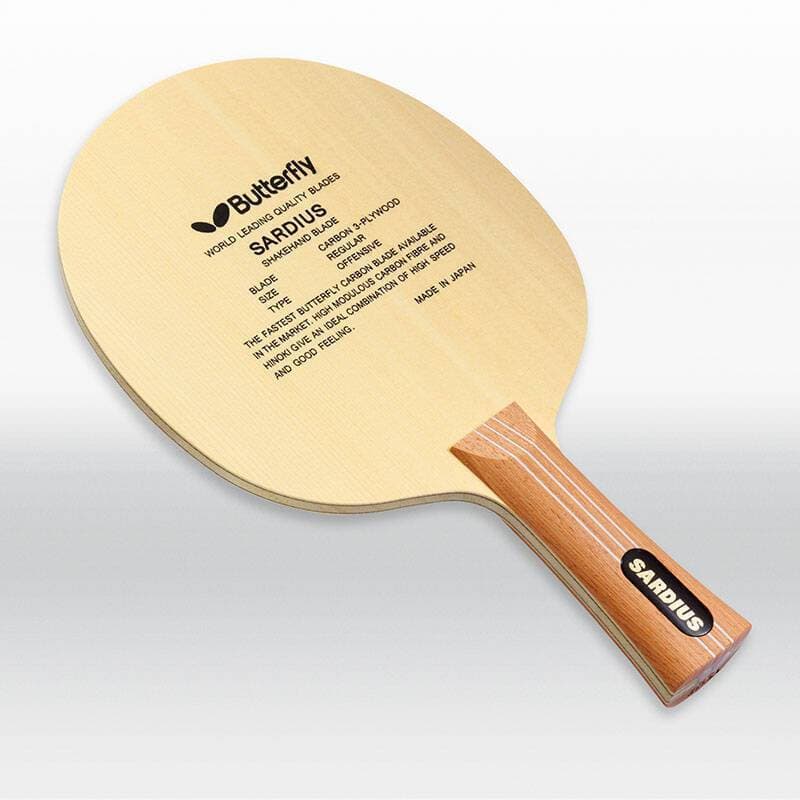
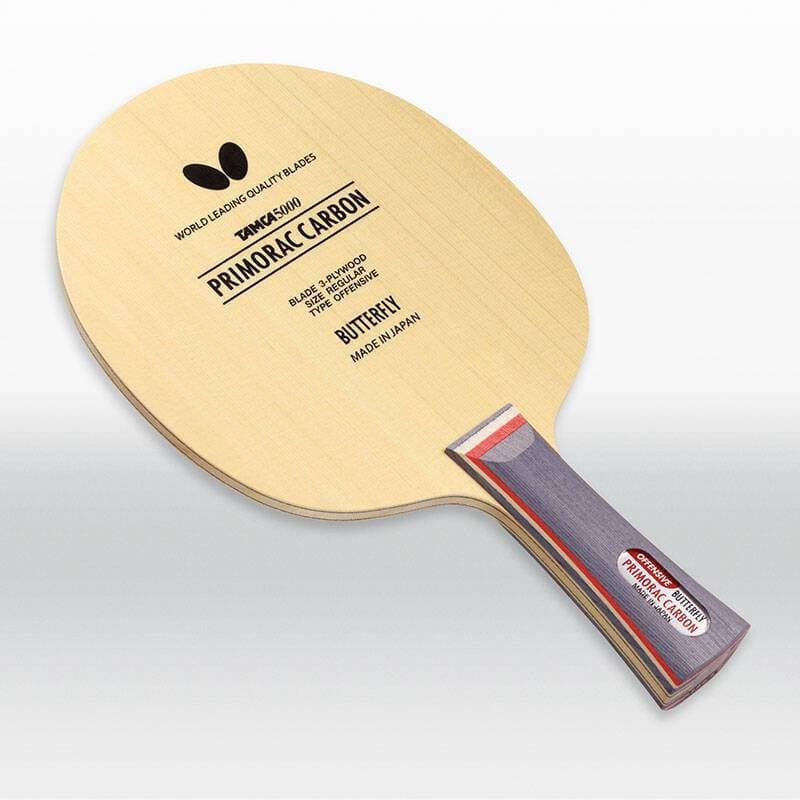
Sardius vs Primorac Carbon — two hard carbon classics
Manufacturer figures
Butterfly official, 1-15Both products use the same manufacturer scale, so these figures can be read side by side.
What actually differs
Both are built the same way: three wood plies with two carbon layers, made thick. That is a different design from the five-ply carbon blades that dominate now — power comes from thickness rather than ply count.
Their official reaction figures are nearly identical. Vibration is what separates them. Sardius is the highest of Butterfly’s 45 blades; Primorac Carbon is high but sits below it.
High vibration means the blade tells your hand exactly where the ball hit. For a player with a repeatable contact point that is useful information; for anyone else it delivers the shock of every mishit as well, and becomes tiring. That is why Sardius is the more selective of the two.
Both sit at the top of the reaction range, so control has to come from the swing. Firm rubber suits them — the blade already throws plenty, and a soft sponge on top will send the ball up.
Sardius
| Playing style | Offensive |
| Grip type | Shakehand |
| Construction | 3-ply + 2 carbon plies |
| Carbon position | Outer |
| Plies | 5 |
| Blade size | 158 × 152mm |
| Thickness | 7.2 mm |
| Weight | 92 g |
| Handle types | FL, ST |
| Made in | Japan |
Primorac Carbon
| Playing style | Offensive |
| Grip type | Shakehand |
| Construction | 3-ply + 2 carbon plies |
| Carbon position | Inner |
| Plies | 5 |
| Blade size | 157 × 150mm |
| Thickness | 6.9 mm |
| Weight | 89 g |
| Handle types | FL, ST |
| Made in | Japan |