
Viscaria vs Innerforce Layer ALC — outer versus inner carbon
Manufacturer figures
Butterfly official, 1-15Both products use the same manufacturer scale, so these figures can be read side by side.
What actually differs
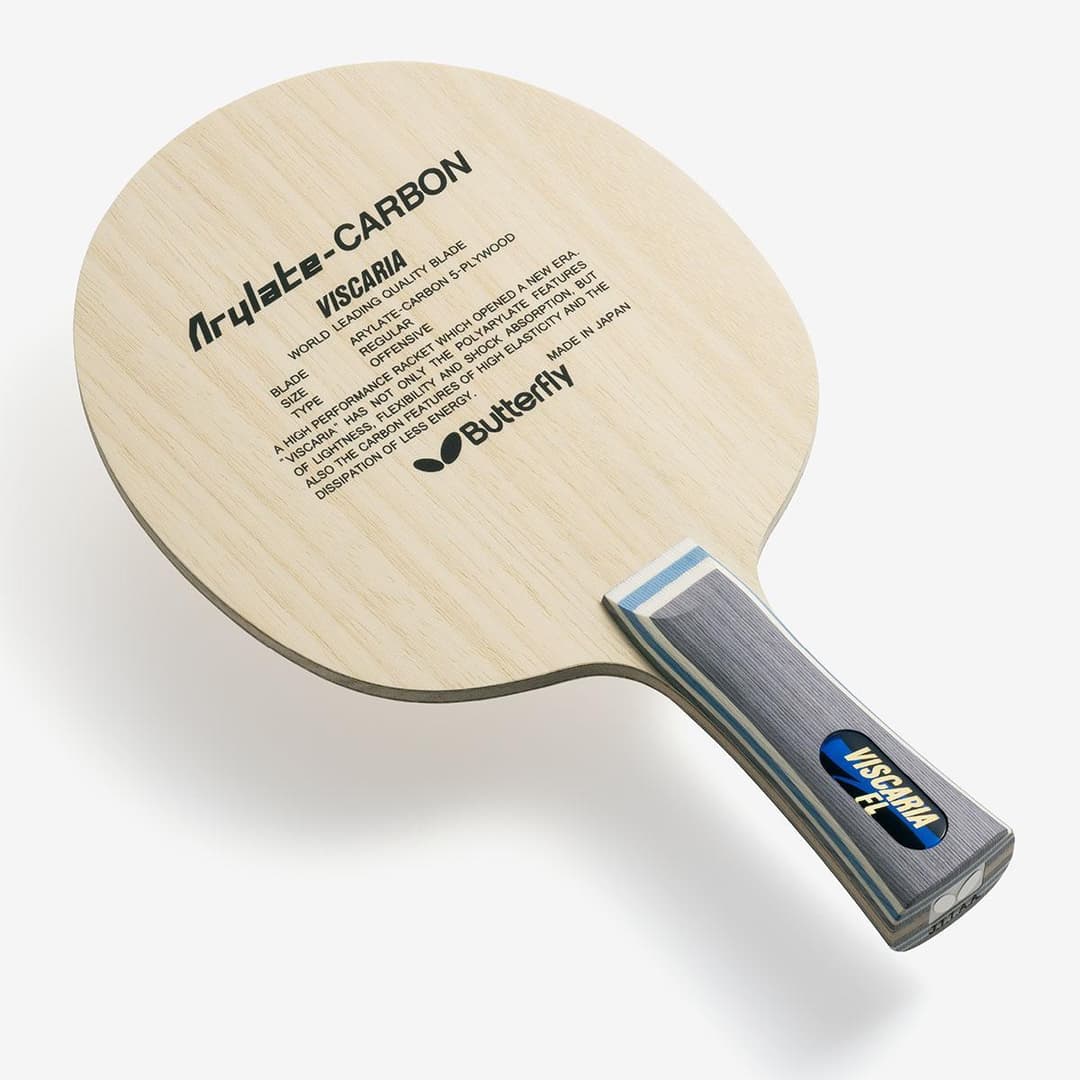
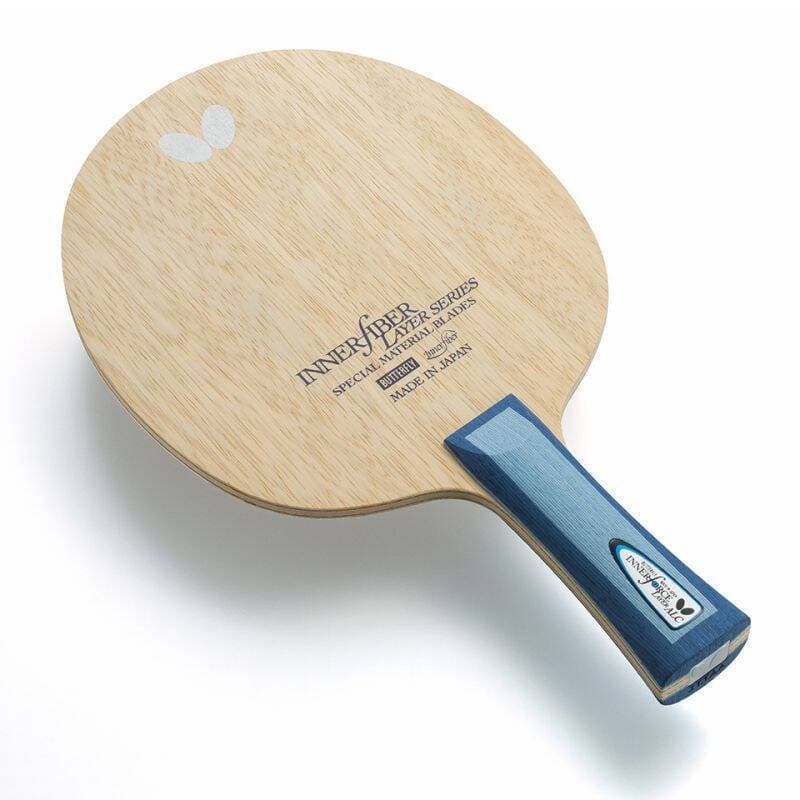
Both blades use the same arylate-carbon. What differs is where it sits. Viscaria places it near the surface; Innerforce Layer ALC places it deeper inside.
On Butterfly’s official reaction figure Viscaria is a full grade higher. Carbon closer to the surface shortens dwell time and increases how hard the ball leaves the face. Its vibration figure is higher too, meaning a more defined response in the hand.
That does not make Viscaria the better blade. The point of the inner layout is to reduce reaction: when the ball sinks in and stays slightly longer, the spin your stroke generated survives better. For a player who scores with spin, that is the advantage.
The choice comes down to this. If you want the blade to supply the decisive ball, take Viscaria. If you would rather generate power yourself and have the blade provide stability, take Innerforce. If you finish points early and flat near the table, Innerforce will feel muted.
Viscaria
| Playing style | Offensive |
| Grip type | Shakehand |
| Construction | 5-ply + 2 Arylate-Carbon plies |
| Carbon position | Outer |
| Plies | 7 |
| Blade size | 157 × 150mm |
| Thickness | 5.8 mm |
| Weight | 86 g |
| Handle types | FL, ST, CS |
| Made in | Japan |
Innerforce Layer ALC
| Playing style | Offensive |
| Grip type | Shakehand |
| Construction | 5-ply + 2 ALC plies |
| Carbon position | Inner |
| Plies | 7 |
| Blade size | 157 × 150mm |
| Thickness | 5.9 mm |
| Weight | 85 g |
| Handle types | FL, ST |
| Made in | Japan |